

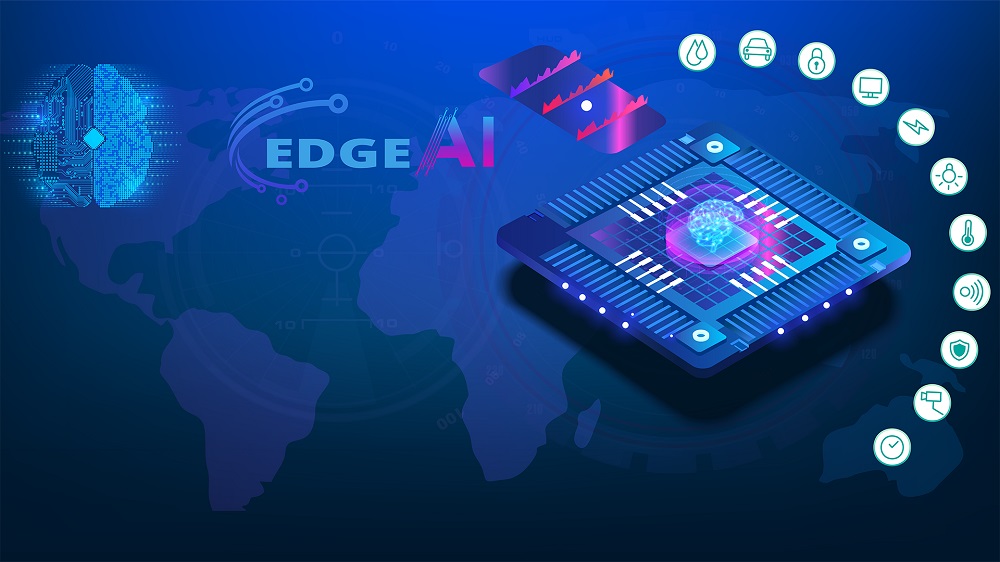
Introduction to Edge AI
Edge AI refers to the deployment of artificial intelligence models directly on edge devices such as smartphones, sensors, cameras, and industrial machines. Instead of sending data to centralized cloud servers, computation happens close to where data is generated. This shift is transforming how modern systems handle speed, privacy, and reliability.
As connected devices grow exponentially, Edge AI is becoming a foundational pillar of next-generation technology.
What Makes Edge AI Different From Cloud AI
Traditional cloud-based AI relies on remote servers for processing, while Edge AI changes this model entirely.
Key differences include:
-
Latency: Edge AI processes data locally, reducing response times
-
Bandwidth usage: Less data transmission to the cloud
-
Offline capability: Devices can function without constant internet access
-
Data privacy: Sensitive data stays on the device
This architectural change enables faster, safer, and more efficient intelligent systems.
How Edge AI Works
Edge AI combines optimized hardware and lightweight machine learning models.
Core Components of Edge AI
-
Edge devices: Cameras, wearables, routers, IoT sensors
-
AI models: Compressed or quantized neural networks
-
Edge accelerators: NPUs, TPUs, or AI-enabled chips
-
Local inference engines: Software that runs predictions on-device
Data is captured, analyzed, and acted upon locally, often in milliseconds.
Key Benefits of Edge AI
Edge AI is gaining traction because it solves several real-world problems that cloud-only AI cannot.
Major advantages include:
-
Ultra-low latency for real-time decision-making
-
Improved privacy compliance by minimizing data transfer
-
Reduced cloud costs and bandwidth consumption
-
Higher system resilience in poor network conditions
-
Scalability across millions of devices
These benefits make Edge AI especially valuable in mission-critical applications.
Real-World Use Cases of Edge AI
Edge AI is already embedded across industries.
Healthcare
-
Real-time patient monitoring via wearable devices
-
On-device diagnostics and anomaly detection
Manufacturing
-
Predictive maintenance using sensor data
-
Automated quality inspection with vision systems
Smart Cities
-
Traffic management through intelligent cameras
-
Public safety monitoring with real-time alerts
Consumer Electronics
-
Face recognition and voice assistants on smartphones
-
Personalized experiences without cloud dependency
Retail
-
Smart shelves and inventory tracking
-
In-store customer behavior analysis
Challenges and Limitations of Edge AI
Despite its advantages, Edge AI comes with constraints.
Common challenges include:
-
Limited computing power compared to cloud servers
-
Model optimization complexity
-
Hardware fragmentation across devices
-
Security risks if devices are physically compromised
-
Maintenance and updates at scale
Overcoming these challenges requires advances in chip design, model compression, and device management.
The Future of Edge AI
Edge AI is expected to grow rapidly as technologies mature.
Emerging trends include:
-
AI-native chips optimized for edge inference
-
Federated learning for decentralized model training
-
Integration with 5G and upcoming 6G networks
-
Increased adoption in autonomous systems and robotics
As intelligence moves closer to data sources, Edge AI will redefine how digital systems interact with the physical world.
Frequently Asked Questions (FAQ)
What types of devices support Edge AI?
Edge AI can run on smartphones, cameras, industrial machines, wearables, routers, and IoT sensors equipped with AI-capable hardware.
Is Edge AI more secure than cloud AI?
Edge AI improves privacy by keeping data local, but devices still require strong security measures to prevent physical or software-based attacks.
Does Edge AI replace cloud computing?
No, Edge AI complements cloud computing. Many systems use a hybrid approach, combining edge inference with cloud-based training and analytics.
What programming frameworks are used for Edge AI?
Popular frameworks include TensorFlow Lite, ONNX Runtime, PyTorch Mobile, and vendor-specific SDKs.
Can Edge AI models be updated remotely?
Yes, models can be updated over-the-air, though this requires careful version control and secure deployment strategies.
Is Edge AI suitable for small businesses?
Yes, especially for applications needing real-time responses, reduced cloud costs, or enhanced data privacy.
How does Edge AI impact energy consumption?
Edge AI often reduces overall energy use by minimizing data transmission, though efficient hardware and model optimization are essential.

Comments are closed.